
Kitchen Safety Checklist Every Parent Should Know

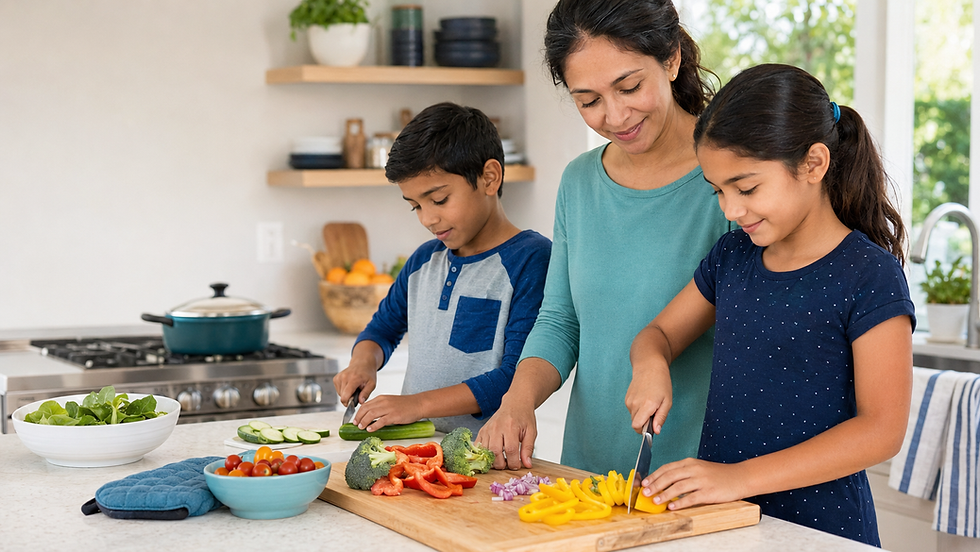
Cooking helps children build confidence, independence, and practical life skills—but safe habits must come first. Here are 10 kitchen safety rules every young cook should learn.
1. Wash Hands Thoroughly
Wash hands with soap and water for at least 20 seconds before cooking and again after touching raw meat, eggs, garbage, pets, or the face.
2. Dress for the Kitchen
Tie back long hair, secure loose sleeves, remove dangling jewelry, and wear closed-toe shoes whenever possible.
3. Prepare a Safe Workspace
Clear the counter, clean the work surface, gather supplies, and place a damp towel under the cutting board to prevent it from slipping.
4. Choose Age-Appropriate Tasks
Select jobs based on your child’s maturity, coordination, experience, and ability to follow directions. Begin with measuring, mixing, washing produce, and assembling ingredients before introducing more advanced skills.
5. Practice Knife Safety
Children should cut on a stable surface, keep fingertips tucked in a “claw” position, and always cut away from the body. Teach them never to catch a falling knife or leave one hidden in the sink.
6. Use Extra Caution Around Heat
Turn pot handles toward the side or back of the stove. Use dry oven mitts, open lids away from the face, and never reach across a hot burner. Children should always ask before using the stove or oven.
7. Prevent Cross-Contamination
Keep raw meat, poultry, seafood, and eggs away from produce and ready-to-eat foods. Use separate cutting boards and never place cooked food back onto a plate that held raw ingredients.
8. Cook Food to a Safe Temperature
Use a food thermometer instead of relying on color or appearance. Poultry and reheated leftovers should reach 165°F, ground meat 160°F, and whole cuts of beef, pork, lamb, and veal 145°F followed by a three-minute rest.
9. Use Appliances Safely
Children should ask permission before using mixers, blenders, food processors, or other appliances. Keep hands and utensils away from moving blades, and unplug equipment before cleaning it.
10. Make Cleanup Part of Cooking
Put ingredients away, wash dishes and surfaces, clean spills promptly, and confirm that burners and appliances are turned off. Cooking is not finished until the kitchen is safe and clean.
Safe Skills Build Confident Cooks
Kitchen safety should not make children afraid to cook. Clear expectations, patient instruction, and regular practice help them become capable and increasingly independent.
At Apex Kitchen Rx, our hands-on cooking experiences help children and teens build practical kitchen skills, food literacy, teamwork, and confidence they can use for life.
Explore upcoming cooking experiences at Apex Kitchen Rx.
Comments